
Reviewed by Kimberly Samantha, beauty blogger and founder of Brunch & Gloss. This article is for general information only and is not medical advice.
Sponsored: This article was published in partnership with a brand or contributor. Links to partner sites are marked as sponsored. Read our editorial policy.
If you’ve been dealing with stubborn, itchy bumps that don’t respond to traditional acne products, you may not have acne at all. Instead, you could be experiencing fungal acne, a common but often misunderstood skin condition.
Despite its name, fungal acne isn’t actually acne. It’s a type of inflammation caused by an overgrowth of yeast that naturally lives on the skin. The best treatment for fungal acne focuses on reducing fungal overgrowth rather than targeting acne-causing bacteria.
Understanding what fungal acne is, how to recognize it, and choosing the best treatment for fungal acne can help you achieve clearer, healthier skin.
What Is Fungal Acne?
Fungal acne, medically known as Malassezia folliculitis or Pityrosporum folliculitis, occurs when Malassezia yeast grows excessively inside hair follicles. This overgrowth triggers inflammation, resulting in clusters of small, itchy bumps that resemble acne. Unlike acne vulgaris, fungal acne is caused by yeast rather than clogged pores and bacteria, so conventional acne treatments often fail to improve it.
Although the condition isn’t true acne, the appearance is similar enough that it’s frequently misdiagnosed.
What Causes Fungal Acne?
Several factors can encourage yeast to multiply and inflame the hair follicles.
1. Hot and Humid Weather
Warm, sweaty environments create ideal conditions for yeast growth. People who live in humid climates or exercise frequently may notice more flare-ups.
2. Excessive Sweating
Sweat trapped against the skin allows moisture to build up, creating an environment where yeast can thrive.
3. Antibiotic Use
Long-term antibiotic use can disrupt the skin’s natural balance of bacteria. When beneficial bacteria decrease, yeast has more opportunity to multiply.
4. Oily Skin
Because Malassezia feeds on skin oils, people with naturally oily skin are more susceptible to fungal acne.
5. Tight Clothing
Workout clothes, helmets, hats, and tight fabrics trap heat and moisture, increasing the likelihood of yeast overgrowth.
6. Weakened Immune System
Individuals with diabetes, compromised immune systems, or certain medical conditions may have a higher risk of developing fungal acne.
How to Tell If You Have Fungal Acne
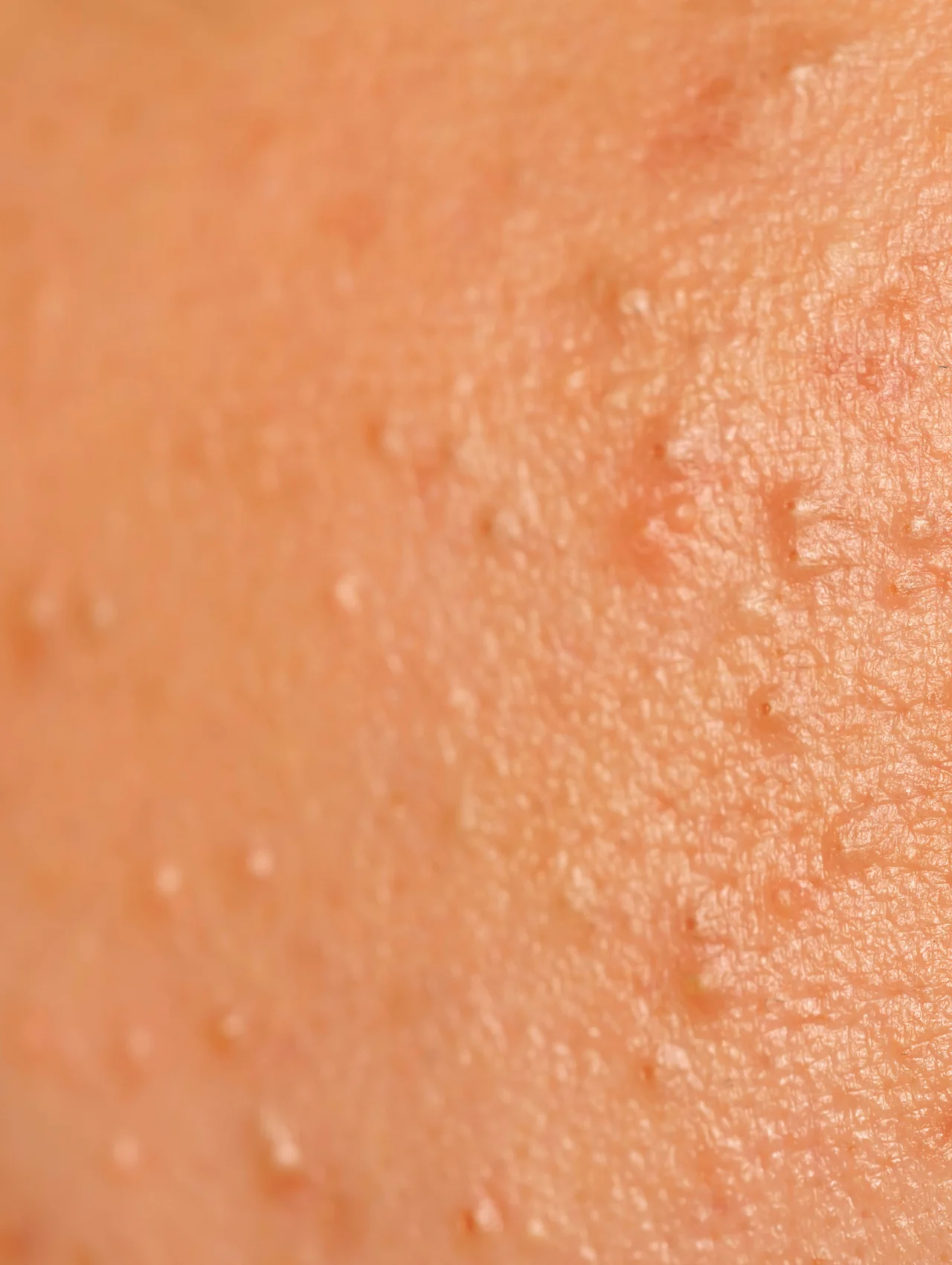
Fungal acne has several characteristics that help distinguish it from traditional acne.
Common symptoms include:
- Small, uniform red or skin-colored bumps
- Persistent itching
- Clusters of pimples rather than isolated blemishes
- Breakouts that don’t improve with standard acne treatments
- Occasional pus-filled bumps
The bumps are usually similar in size, unlike hormonal or bacterial acne, which often produces lesions of varying sizes.
Where Does Fungal Acne Appear?
Fungal acne commonly develops in areas where sweat and oil accumulate, including:
- Forehead
- Hairline
- Face
- Chest
- Back
- Shoulders
- Neck
- Upper arms
Because it affects hair follicles, fungal acne can occur almost anywhere hair grows.
Fungal Acne vs. Regular Acne
Although they may look alike, fungal acne and acne vulgaris require different treatment approaches.
| Fungal Acne | Regular Acne |
| Caused by yeast overgrowth | Caused by excess oil, clogged pores, and bacteria |
| Often itchy | Usually not itchy |
| Small, uniform bumps | Various sizes of blackheads, whiteheads, and pimples |
| Appears in clusters | Can appear individually or in groups |
| Doesn’t respond to typical acne products | Often improves with acne treatments |
This is exactly why the best treatment for fungal acne targets yeast rather than acne-causing bacteria.
The Best Treatment for Fungal Acne
Because fungal acne is caused by yeast, treatment focuses on reducing fungal overgrowth rather than targeting acne-causing bacteria.
Use Antifungal Products
For mild cases, over-the-counter antifungal creams and medicated cleansers are often the best treatment for fungal acne. These usually contain ingredients such as ketoconazole, selenium sulfide, or pyrithione zinc. More persistent cases may require prescription topical or oral antifungal medication from a healthcare professional.
Choose Non-Comedogenic Skincare
Look for lightweight, non-comedogenic skincare products that won’t clog pores or create excess buildup on the skin.
Keeping your skincare routine simple and barrier-supportive can help minimize irritation while your skin heals.
Keep in mind that “non-comedogenic” and “fungal-acne-safe” are not the same thing. Because Malassezia feeds on certain oils, many products labeled non-comedogenic can still trigger flare-ups. The yeast tends to thrive on the fatty acids and esters found in ingredients like coconut oil, many plant oils, and some fatty alcohols, so a fungal-acne-safe routine focuses on avoiding those feeders rather than simply avoiding pore-clogging ones. When in doubt, choose simple products with short ingredient lists and patch-test anything new before applying it to your whole face.
Cleanse After Sweating
Shower or wash your face shortly after exercising or sweating heavily to reduce moisture and oil on the skin.
Avoid staying in sweaty workout clothes for extended periods.
Wear Breathable Clothing
Loose-fitting cotton and moisture-wicking fabrics improve airflow and reduce the warm, damp conditions that encourage yeast growth.
Avoid Picking the Bumps
Scratching or squeezing fungal acne can worsen irritation and increase the risk of secondary infection or post-inflammatory marks.
How Long Does Fungal Acne Take to Clear?
With the right antifungal approach, many people notice improvement within two to four weeks, though more stubborn cases can take longer. Because Malassezia lives on everyone’s skin, the goal isn’t to eliminate the yeast completely but to bring it back into balance. Consistency matters more than intensity: sticking with a simple routine, cleansing after sweating, and avoiding trigger ingredients usually produces better results than aggressively layering products. If you see no change after several weeks, it may be time to switch treatments or consult a professional.
Can You Prevent Fungal Acne?
While fungal acne can recur, a few habits may reduce flare-ups:
- Shower after workouts
- Wash gym clothes after every use
- Wear breathable fabrics
- Avoid heavy, greasy skincare products
- Keep skin clean and dry
- Follow a consistent skincare routine
- Replace sweaty hats or headbands frequently
If you’re prone to recurrent fungal acne, your dermatologist may recommend occasional maintenance use of an antifungal cleanser.
When Should You See a Dermatologist?
If your breakouts are itchy, persistent, or don’t improve after several weeks of using standard acne products, it’s worth consulting a dermatologist.
A healthcare professional can determine whether your skin condition is fungal acne, bacterial acne, hormonal acne, or a combination of multiple conditions. In some cases, a skin sample may be examined to confirm the diagnosis.
To confirm the diagnosis, a dermatologist may examine your skin under a Wood’s lamp, a small ultraviolet light that can make certain yeasts glow, or perform a simple potassium hydroxide (KOH) test on a superficial skin scraping to look for yeast under a microscope. These quick, painless checks help rule out bacterial or hormonal acne so you don’t waste months on the wrong products. Getting an accurate diagnosis early can save you weeks of trial and error and points you toward the antifungal routine that will actually work.
Final Thoughts
Fungal acne is a common skin condition that often goes unrecognized because it closely resembles traditional acne. However, the underlying cause is entirely different. Instead of clogged pores and bacteria, fungal acne results from an overgrowth of yeast within the hair follicles.
The best treatment for fungal acne focuses on controlling yeast, maintaining a healthy skin barrier, and reducing excess heat, sweat, and oil. By recognizing the signs early and choosing appropriate skincare products, you can support healthier, clearer skin that lasts longer.
Glow-Up Skincare Hacks People Swear By
Benefits of Skin Renewal Through Exfoliation with Iso Placenta Serum
4 Amazing Celeb-Recommended Nighttime Routine and Skincare Tips
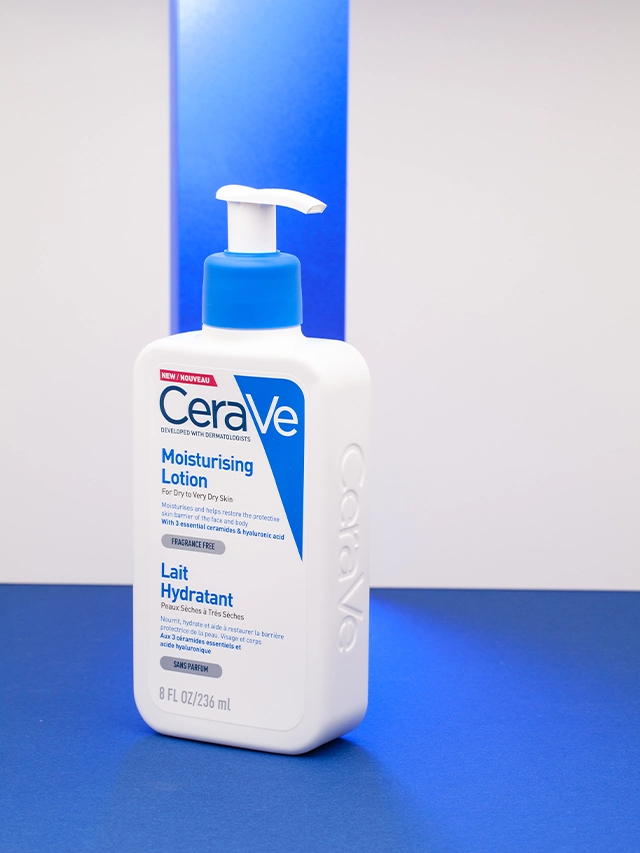
4-Step CeraVe Skincare Routine for a Morning Glow

The Successible Life editorial team covers fashion, beauty, makeup, skincare and nail trends in English and Spanish. Articles published under this byline are written and edited by our in-house editors. Spotted an error or have a question? Get in touch through our contact page. / El equipo editorial de Successible Life escribe sobre moda, belleza, maquillaje, cuidado de la piel y uñas en inglés y español.